Harmony A.i.R. MJ Levy Dickson

Finding the Language of the Beach
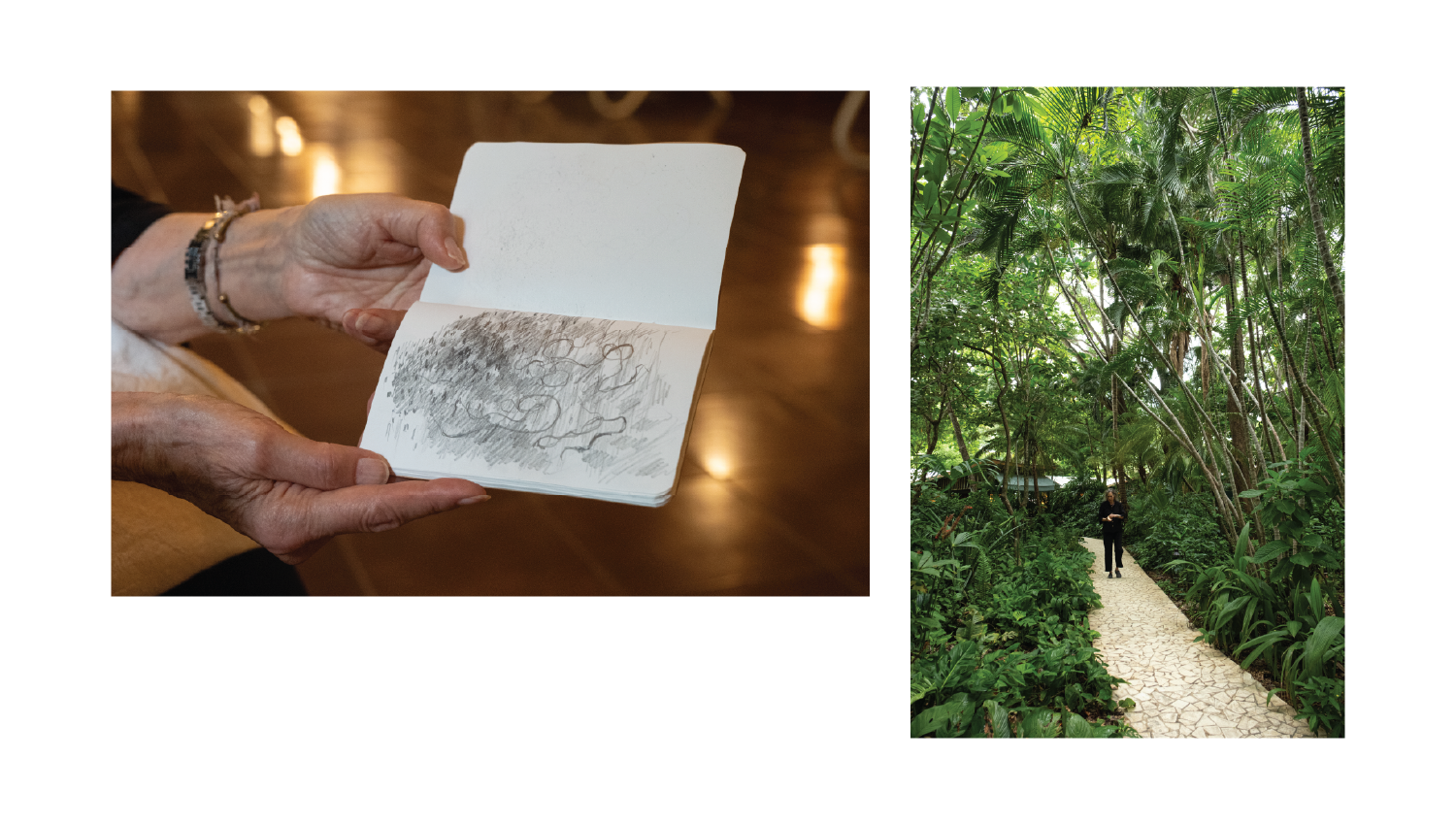
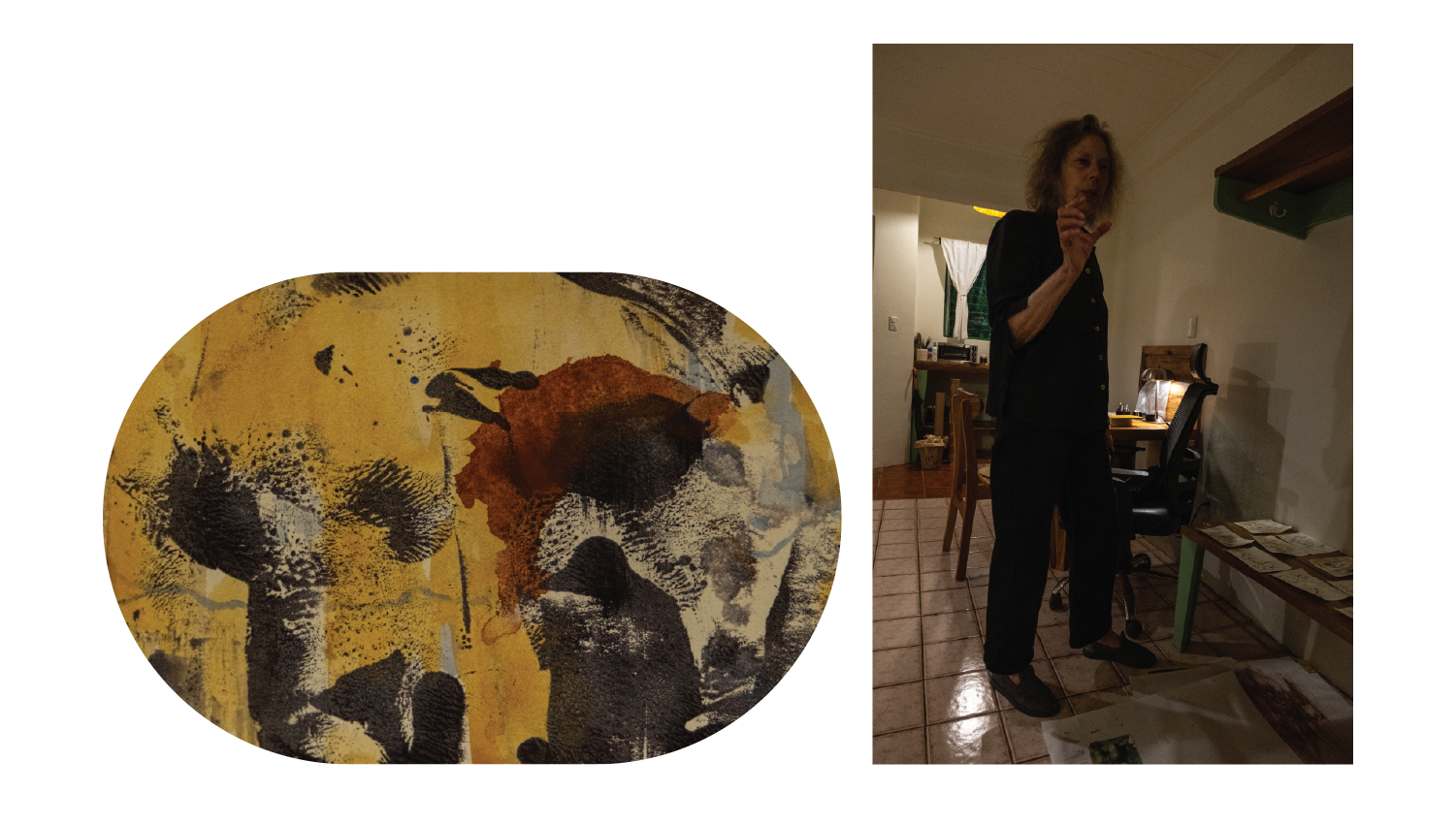
Rather than arriving with fixed ideas, MJ Levy came to Harmony with blank rolls of canvas and a willingness to let the place reveal itself. And over time, it did — through the sand, the native plants, and the water.
Her days moved between the studio, the beach, the gardens, and a small glass installation placed in the front desk fountain. What began as a series of possible projects slowly opened into something else: an exploration of process, discovery, and the wisdom of natural forms.
"The basis of a residency for me was experiment, process, discovery," she says. "And discovering that maybe there isn't anything to discover."
But, of course, there was..
Letting the place teach you
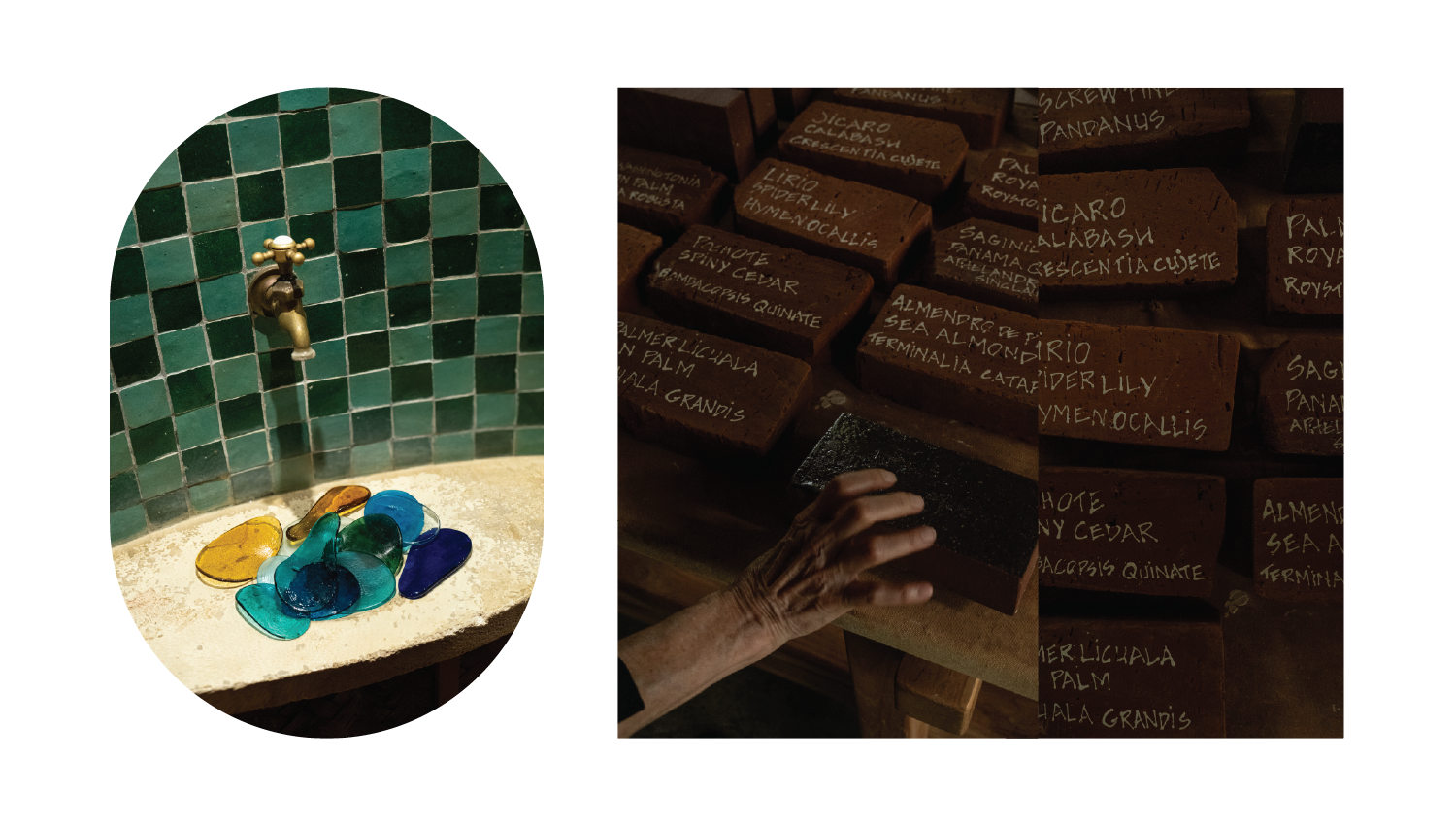
One of the first projects to take shape during the residency came through the gardens. In conversation with Alicia, MJ began thinking about a community project to identify the plants around Harmony. Previous wooden labels had rotted, so they began searching for a material that could last longer. Ceramics came up. Then, through conversations with Amilkar at the ceramics studio, the idea of using bricks emerged.
The choice made sense — bricks already belong to Harmony’s material language. They are part of the architecture, part of the walls, part of the place. To bring them into the gardens as plant markers felt like a natural choice.
“So it put the material in conversation with itself again,” MJ says.
She collected bricks, learned to engrave them, experimented with glaze, and began working through the practical and poetic questions of how a plant label might live in a garden.
Some decisions worked. Some did not.
By the end of her stay, the project felt less finished than it did just barely cracked open.
“I think now that it’s the end of my stay, it’s actually the beginning of the project,” she says.
Residencies at Harmony are measured not in terms of output, but in terms of process. Amidst the intangibles and the half-finished objects, there’s often a budding relationship between an artist, a place, and an idea that continues pushing upwards even after the artist’s departure.

Lines have personalities
For MJ, the central question became the line.
Lines here in Nosara took on a particular character to her. They thrummed with movement.
“Lines have personalities,” she says. “They vary. And sometimes the art is within the line, the motion.”
She became fascinated by the small translucent worms that move beneath the sand, leaving soft, wandering trails behind them. She studied the crabs, too, and the matchstick-like patterns they make while digging into the beach. Each line had its own rhythm.
“They’re just so natural,” she says. “When you try to do it yourself, you get caught in your own mind and your own energy.”
That tension — between natural mark and human mark — became part of the work.
How do you recreate something without flattening it?
How do you honor movement without freezing it completely?
How do you bring the energy of the beach into a two-dimensional surface? MJ describes it this way:
“In recreating life in two dimensions, you have to make still life move, and you have to make moving objects stand still.”
That is where much of her work seems to live: in the space between motion and stillness.
Nosara Beach Walk
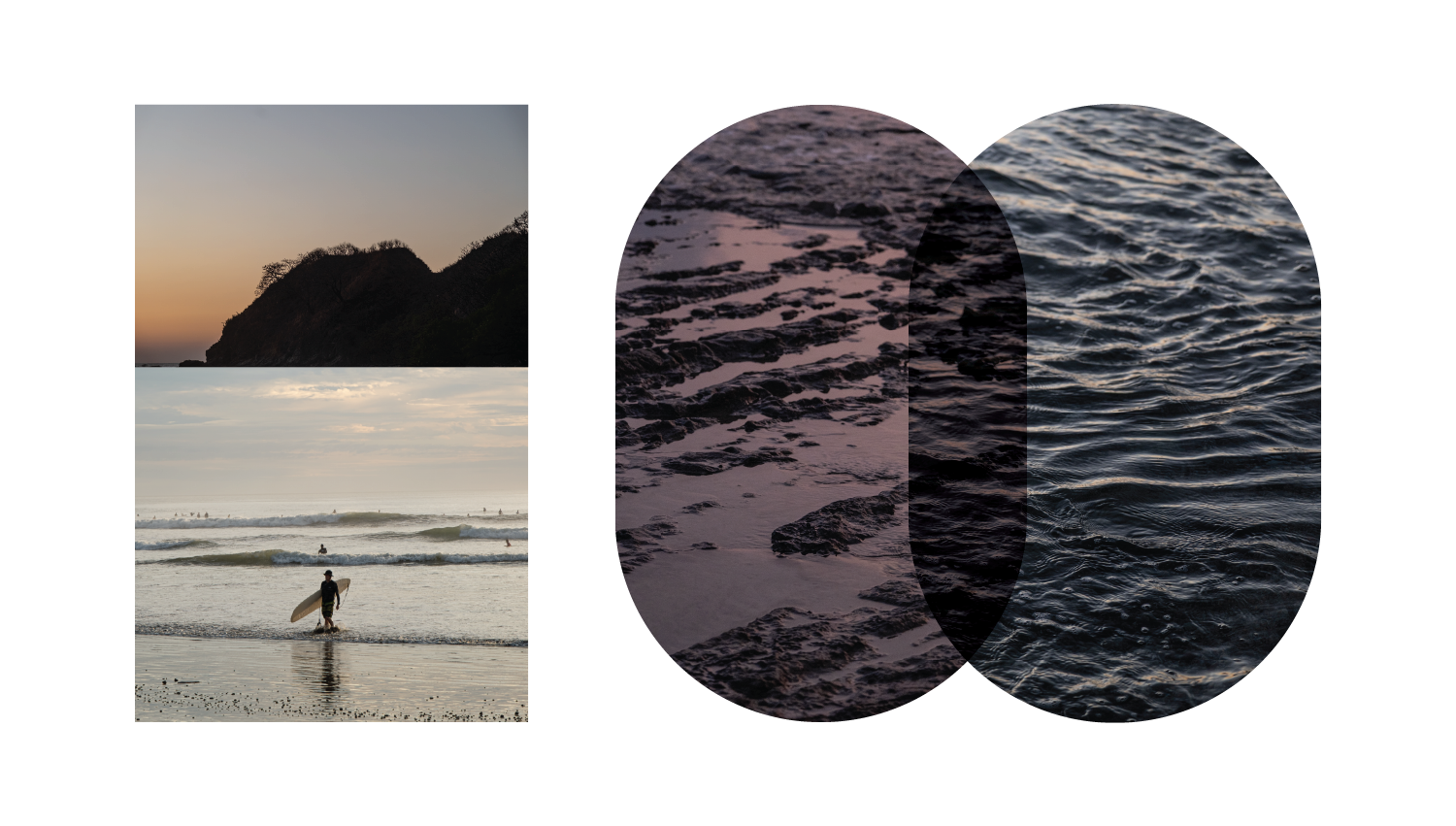
As she continued drawing, MJ began letting the lines move across pages rather than keeping them contained. She called the series “Nosara Beach Walk.”
These works are not maps in a literal sense, but they carry the experience of walking — moving slowly, looking down, and noticing what appears at your feet. A crab line leads to a shell. A waterline leads to a memory. A bicycle track becomes the possibility of a painting.
The beach walk becomes a form of topographical reading.
Not everything connects directly and not every mark explains itself. The tide continually rearranges it all.
And that randomness becomes part of the composition.
What comes next
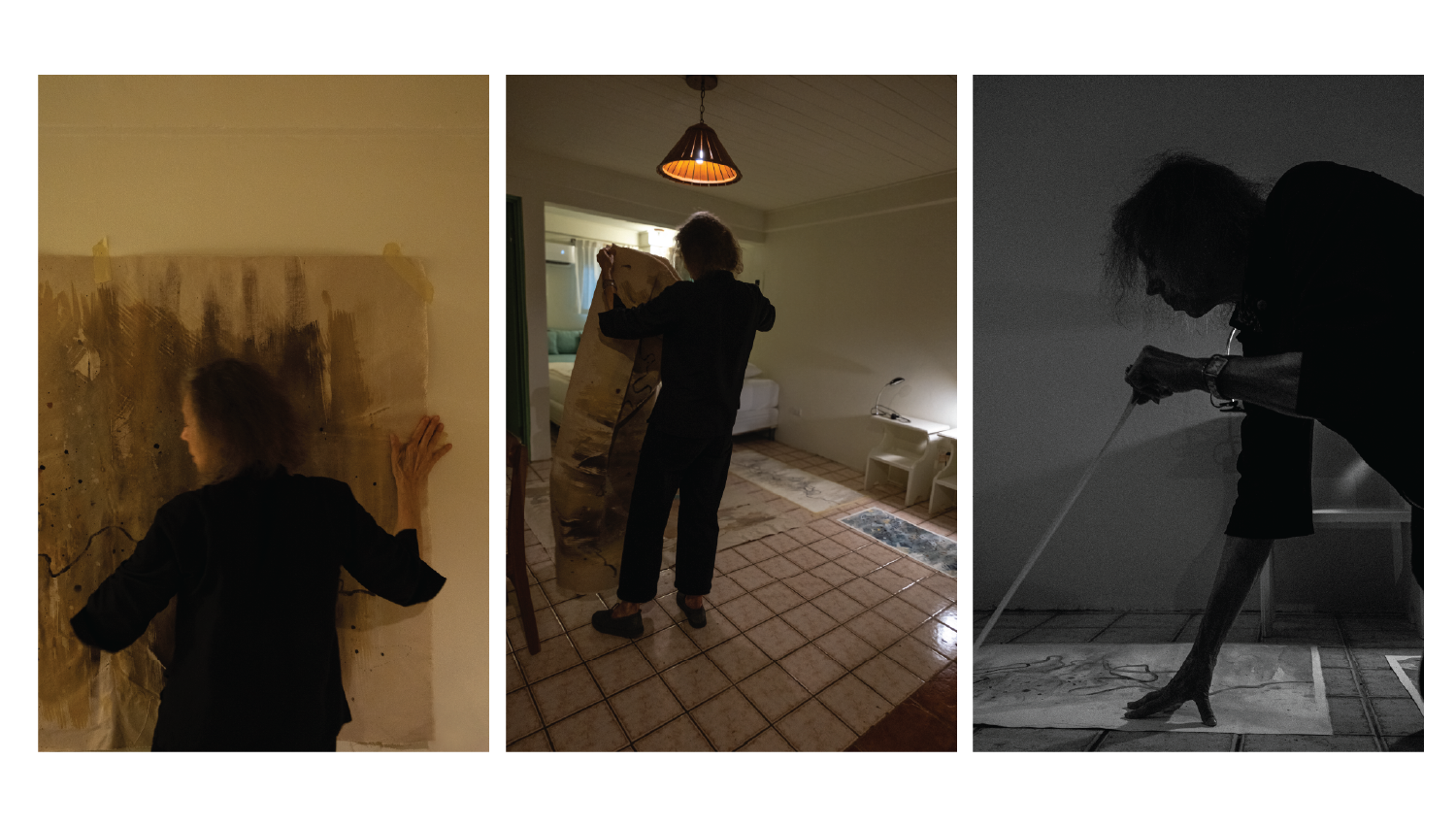
By the end of the residency, MJ knew some pieces would continue. Others needed to go home with her, to be seen in her own studio, in her own light, with more time.
“All the above,” she answers when asked whether she will continue the work, leave it as part of the residency, or move on.
She speaks about finishing certain pieces and letting the rest remain part of the process.
Before leaving, she wanted one more beach walk.
“To take that memory,” she says. “And work from within it.”
(Head back to our Journal Page...)